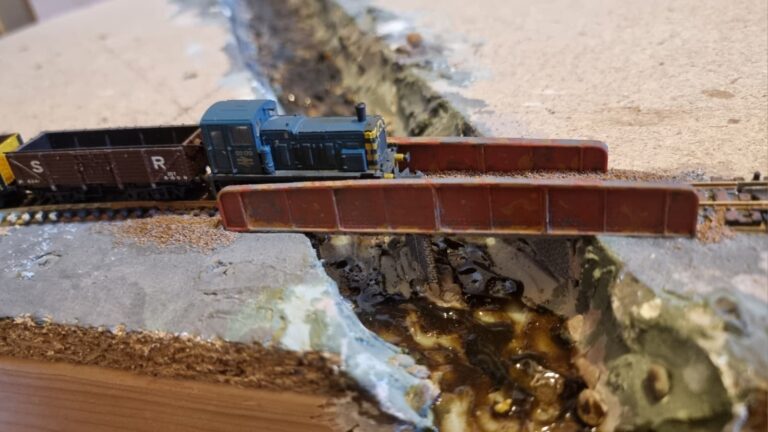
Christmas morning 1976, a very overexcited 8-year-old creeps downstairs to see if Santa has been. Underneath the Christmas tree is a large, fairly flat present marked, ‘To David, from Santa’. Little did I know that this box contained something that I’m still fascinated with 50 years later… my first model train set.
Within 20 minutes, the simple oval of track was set up and a HO gauge, Great Western Railways, 0-6-0 pannier tank engine which I named ‘Duck’ after the ‘Thomas The Tank’ story books character, was trundling round in the living room pulling 3 trucks and a guards van (did you notice I drifted into railway geek mode there?). And so, it started, my love of tiny things.
Within a year, my dad and I (well… my dad, to be realistic) had constructed a tabletop layout in my bedroom (was this really a present for me or my dad?). Now I have to explain at this point that I had the smallest bedroom in the house and the layout took up more than half the space, so I had a single bed, a set of drawers and my railway with a small 0.5m corridor up the middle – cosy!
I loved it. I had farm animals, stations, tunnels, signals, a mountain (!) and a goods yard. I built model houses and had model airplanes flying overhead.
I’m aware that my dad was a large part of why I was interested in railways. He had a double degree in mathematics and physics and was always fascinated by how signals and points worked. He also had the ability to ‘blag’ his way into places we weren’t supposed to go. As a kid, I got taken into many signal boxes and got to pull the levers and ding the bells. I remember once getting up a 4am to meet the owner of the Union of South Africa (a massive LNER Class A4 4-6-2 engine) so we could watch it being ‘fired up’ from cold which took HOURS! I sat in the cab fascinated, watching the fire get started and built up with coal.
‘Railways’ was one of the few things we ‘did together’, so I remember these times fondly. Precious times.
Fast forward 9 years, and I’m heading to Aberdeen to study architecture, as I wanted a job that wasn’t going to just be an office job, but one where I could get outside (interesting reason to base a career on?). I realised (to my delight) that as well as drawing buildings, I’d also get the chance to build little scaled models of them. Many, many hours spent cutting up foam board and plastic sheets to create houses, museums, art galleries and restaurants. In fact, in my final year project, I probably made more models than drawings as I’d discovered the fun of using a wind tunnel to test how buildings react in the wind.
Forward another 10 years, and I briefly started building model kits of motorcycles. These kits contained hundreds of parts, which all needed to be painted and glued together with great care. They even came with rubber tyres.
Another leap forward by 10 years, and I’m in my late thirties. My dad has passed away, and I remember a great feeling of frustration. He had retired 10 years earlier, vowing he was going to build a ‘proper’ model railway layout. But time had run out, and he never quite got round to it. I felt sad that his retirement had passed so quickly and he’d never achieved his goal.
One final leap forward of 10 years and finally, I realise that I have the space and the means to build a model railway layout of my own, and so it began…..
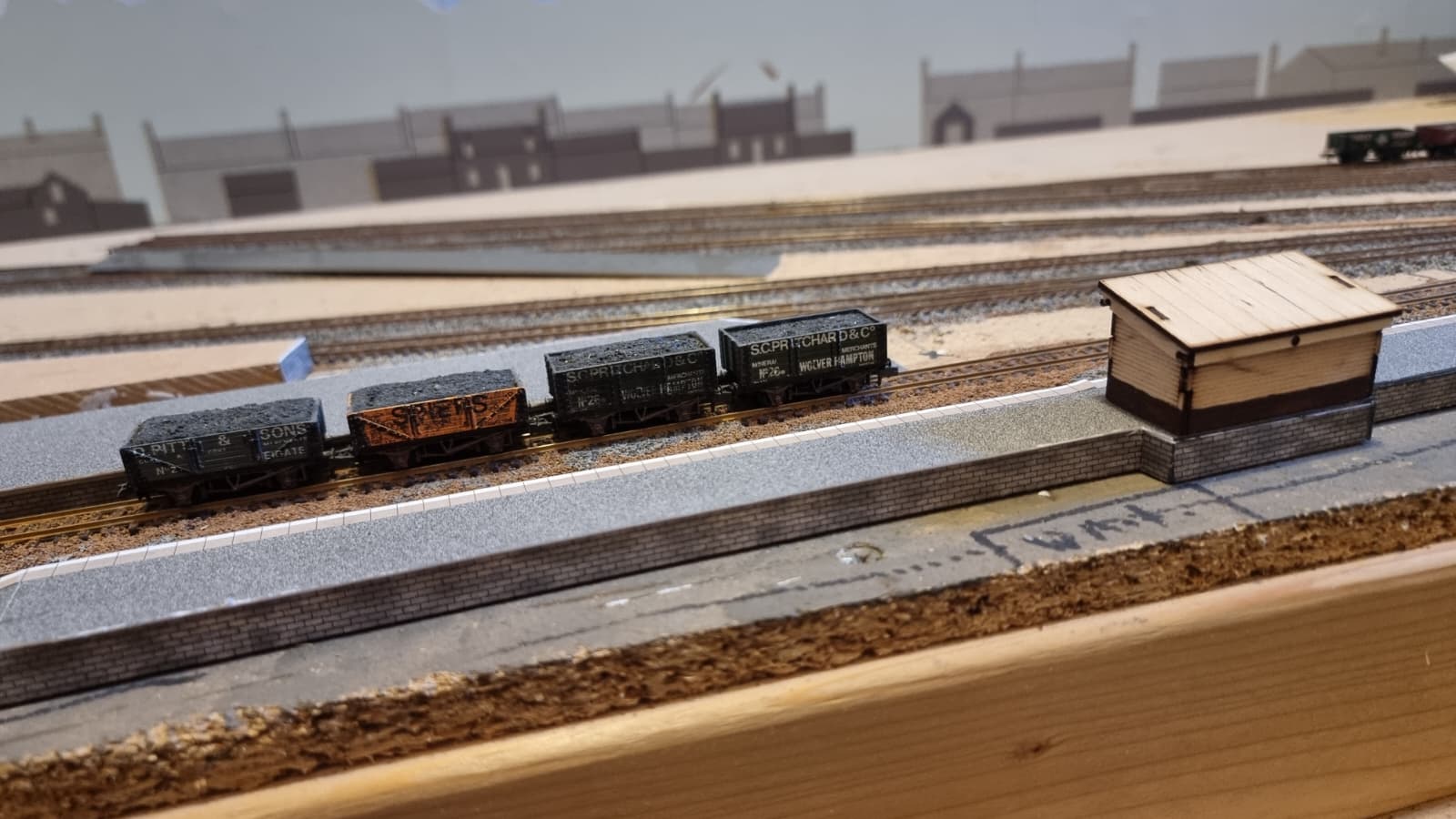
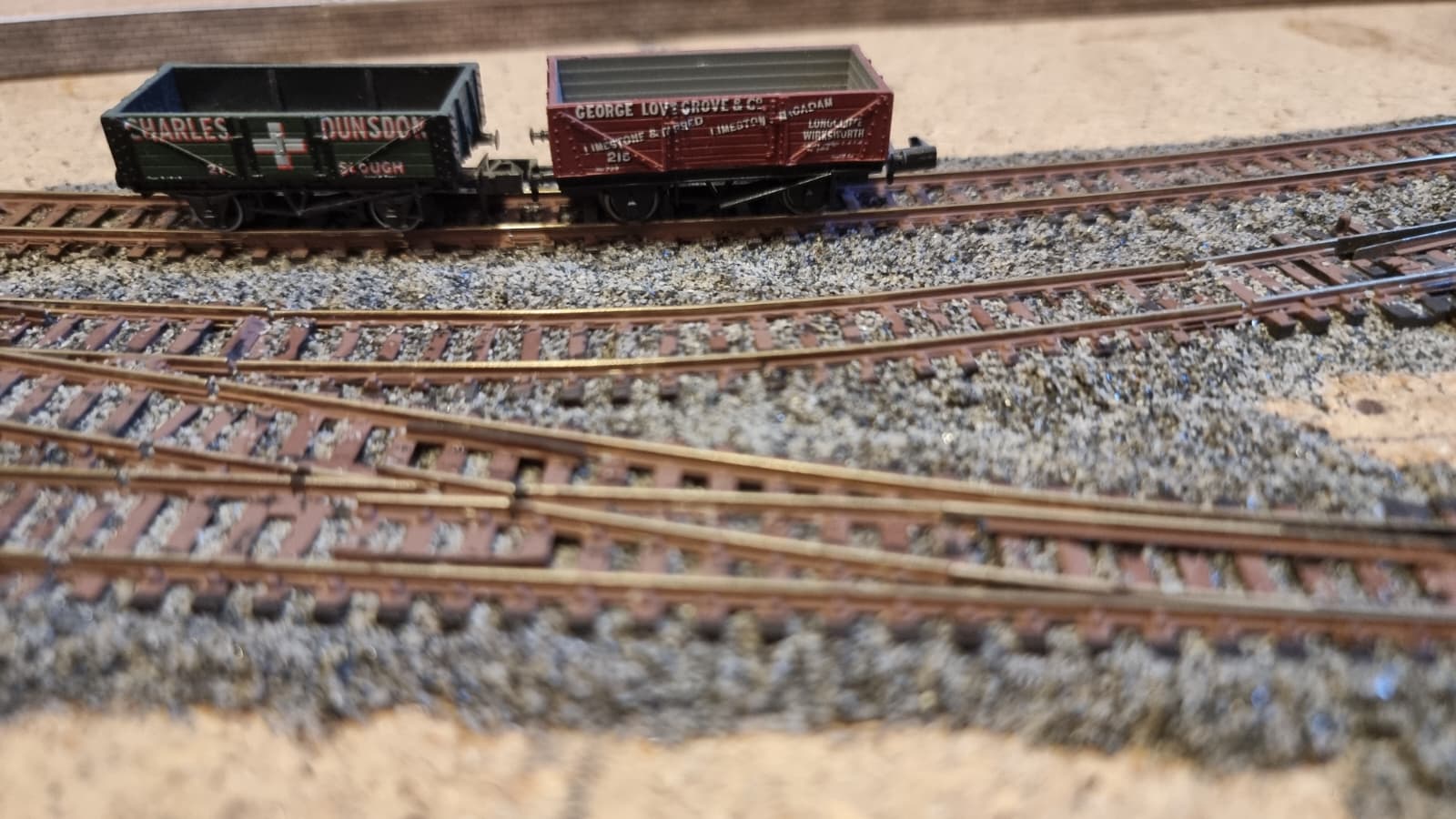
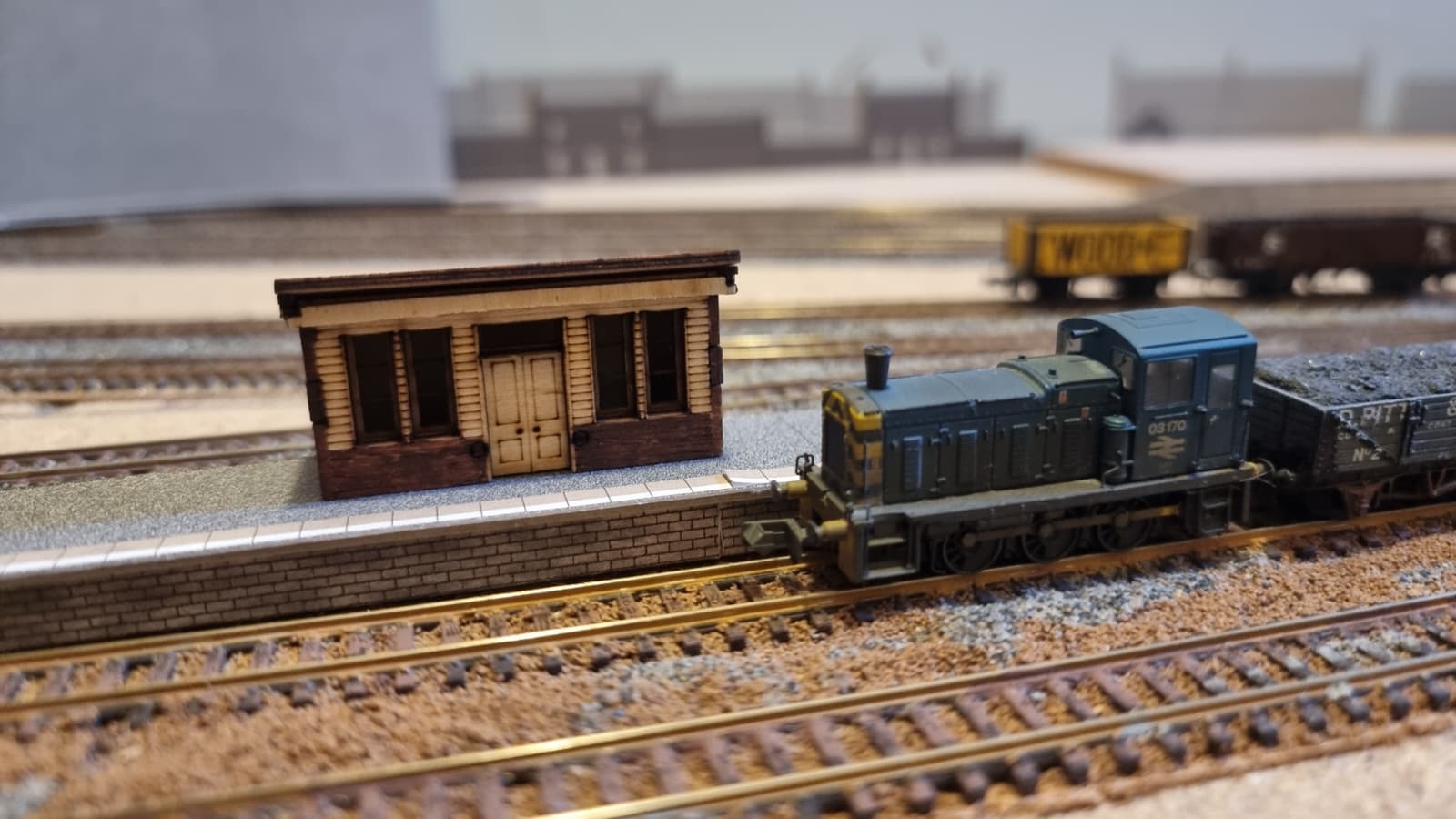
What to build? What scale to model at? What era of railway to base it on? How big a layout to model? How to find all the information? How do I even build a model railway?
And so, (after much procrastination) I decided to build a N gauge layout of Rothes Station (near Elgin and where my in laws live) set in around the mid 1960’s in the cross over between steam engines and the first diesels and not long before the line was closed in 1968.
Old maps were found showing the layout of the station and the goods yard that served the local distilleries. I joined the Great North of Scotland Railway Association, which gave me access to a database of hundreds of black-and-white photographs of the station. I even ‘accidentally’ bumped into a man at a model railway exhibition, who, when I said I was making this model, said he had a copy of the diagram that used to hang in the Rothes Station signal box showing the layout and all the signals (I was very excited!).
I also joined the N Gauge Modellers Association, which gave me access to tons of information about how to actually create the model. Everything from laying the track, how to add ballast, how to wire it all up (including wiring points which still hurts my head when I try to understand it!), how to create station platforms and buildings, model grass and trees, add people and vehicles, how to create rivers (my layout has two), how to put lighting in buildings…. Yes, the list goes on and on and on! I even learnt I needed to paint the side of the rails to make them look rusty!
So, how long does it take to build a model railway? Well, how long is a piece of string? I’m about 8 years in, and I’ve got LOADS still to do. Hours and hours of painting, modelling and adding detail, but all researched to make it as close to the real thing as possible. And some things don’t work the first time. I’m ‘learning on the job’, and that means mistakes. That means starting again. It means being disappointed with my work and trying to improve.
But as with all things in life, it’s not really about ‘finishing’. It’s about the journey.
I love learning new things. I love creating models that accurately depict real life. I love the feeling when you get into the ‘flow’. When you are 100% concentrating on what you are doing, with no distractions, the rest of the world falls away. Your worries and problems are parked, even for a short time, and you are really living in the moment. Absorbed completely by what you are doing. Learning, problem solving, researching, discovering, achieving, failing, trying again.
And I appreciate that modelling railways is not for everyone, but it’s my thing. My mental health space. A thing that makes me feel good. Something to give me a sense of achievement. A thing that I do on my own and have no one to answer to. My tiny little model world. My connection back to the past and to my dad.
My fascination with tiny things.